
What makes this half-day Reykjanes outing so interesting is that it feels like Iceland in fast-forward: tectonic forces, steaming ground, and big ocean views all within a few hours. I love how private it stays, with your own timing and drop-off options, and I also love the way the stops connect to real geology instead of just checking boxes. One consideration, though: because you pack a lot in, the walking is short but you will move at a steady pace, so plan for quick stops and fast photo moments.
This is also a smart choice if you’re doing a first visit to Reykjavik and need something from the Keflavik side. You get a welcome at the airport, then a guided loop through the Reykjanes UNESCO Global Geopark area, with drop-off either back at the airport or at your accommodation.
If weather turns wet, don’t tough it out. Bring a rain coat, because wind and mist can change how long you want to stay outside.
Key highlights that make this tour worth your time
- Bridge Between Continents at Sandvík shows a real fissure tied to the Mid-Atlantic Ridge
- Leif the Lucky’s Bridge and a certificate stop give you a fun take-home that matches the science
- Reykjanes Lighthouse history spans the 1878 build, 1907 to 1908 relocation, and the 1908 demolition
- Gunnuhver mud pools are Iceland’s largest, with active boiling geothermal features in UNESCO Geopark territory
- Krysuvik boardwalk walking through Seltún’s mudpots and fumaroles keeps you close to the action
- Kleifarvatn Lake photo time for one of Reykjanes’ deepest lakes, with dramatic volcanic surroundings
Private pickup from Keflavik, then straight into Reykjanes
This tour starts the way you want in Iceland, with a pickup from Keflavik International Airport. After you arrive, you look for a sign with your name, and your driver takes over. You’ll also get a mobile ticket, which makes it easier to stay organized when you’re already tired from travel.
Timing is the whole point here. Expect about 4 to 5 hours, and that makes it ideal for early arrivals, late landings, or a practical layover. One group with a roughly 10-hour layover said it fit perfectly, and that’s the real value of this format, not just “short tour” bragging rights.
You also get flexibility at the end. You can return to the airport, or you can be dropped at your hotel or accommodation. That means you don’t have to waste your first Iceland evening with extra transfers.
More of the Reykjanes peninsula:
- Reykjanes Peninsula: Super Jeep Volcano Shuttle Tour
★ 4.6 · 58 reviews - Reykjavík: Volcano Eruption Site and Reykjanes Hiking Tour
★ 4.6 · 1,066 reviews - Reykjavik: Guided Tour to Volcano and Reykjanes Geopark
★ 4.5 · 428 reviews
Bridge Between Continents at Sandvík and Leif the Lucky’s Bridge
The Reykjanes Peninsula is all about plate tectonics, and this first stop gives it to you in a way your brain can actually hold onto. At Sandvík, you’ll find a small footbridge over a major fissure. It’s built as a symbol for the connection between Europe and North America, but the more useful part is that it makes the Mid-Atlantic Ridge feel real.
This area sits on one of the world’s biggest plate boundaries, the Eurasian and North American plates drifting apart. When you’re standing near a fissure, the science stops being a paragraph and becomes something you can point to. Even the structure of a simple footbridge helps, because it turns a confusing idea into a clear moment.
You can also cross the continental divide using Leif the Lucky’s Bridge. If you want a souvenir that matches the story you’re hearing, there’s a chance to get a personalized certificate at the Reykjanes information center and the Reykjanes Geopark visitor center at Duus Cultural House.
Practical tip: this is a short stop, about 20 minutes, so I’d treat it as a “get your bearings fast” moment. Dress for wind, and take a couple of steady photos rather than racing through everything.
Reykjanes Lighthouse: a working landmark with strong stories
Next comes Reykjanes Lighthouse, and it has the kind of backstory that explains why Iceland keeps rebuilding what the ocean tries to take. The first lighthouse in Iceland was built on Valahnúkur in 1878. By 1905, earthquakes and surf had damaged it enough that the lighthouse faced a serious risk of falling into the sea.
So in 1907 to 1908, engineers built a new lighthouse on Bæjarfell hill in Reykjanes, and the older one was demolished with an explosion on April 16, 1908. That timeline matters because it shows Iceland’s coastline is not static. Nature reshapes the coast, and human engineering keeps adapting.
A survey supervised in 2007 by the Icelandic Maritime Administration concluded that Reykjanes Lighthouse was the most popular lighthouse among Icelanders. You don’t need to memorize that fact, but it helps you understand the lighthouse is more than a pretty photo spot. It’s tied to maritime life and local pride.
Two details I always like: the lightsignal is 69 meters above sea level, while the actual lighthouse structure is 26 meters tall. The lighthouse also includes a radio beacon with a correction signal, and it has carved rock and concrete elements designed by Frederik Kjørboe (architect) and Thorvald Krabbe (engineer).
Stop time is around 20 minutes, and admission is free. I’d come prepared to look at the lighthouse and then scan the surrounding coastline. The views are doing as much work as the history.
Gunnuhver Hot Springs, Iceland’s largest mud pool
If the lighthouse is about the sea and survival, Gunnuhver Hot Springs is about the ground working underneath you. This area is close to the lighthouse, and it’s collectively named Gunnuhver after a female ghost said to have been laid there.
What you’re seeing is geothermal activity turning into surface drama. Mud pools form where steam from boiling geothermal water rises and condenses, mixing with surface water. Gases like carbon dioxide and hydrogen sulfide make the water acid, and that helps turn fresh lava rock into clay.
Here’s the part that makes Gunnuhver especially active in recent years. Geothermal steaming increased markedly after a pressure drawdown in the geothermal reservoir when production started in 2006. Today, Gunnuhver includes what’s described as Iceland’s largest mud pool, and it’s about 20 meters wide, boiling vigorously.
Because this is inside the Reykjanes UNESCO Global Geopark area, the stop also works as a real-world class on the North Atlantic ridge rising from the ocean. Even if you don’t want a geology lecture, you’ll still come away with a clearer sense of why the peninsula looks the way it does.
Plan for about 20 minutes and free admission. Also, don’t underestimate smell and heat. If the ground is steaming strongly, you’ll feel it even before you see the details in the mud.
A few more Reykjanes trips worth comparing
- Blue Lagoon: Premium Admission with Drinks and Face Masks
★ 4.7 · 348 reviews - Reykjavik International Airport Private Arrival Transfer
★ 4.5 · 195 reviews - Blue Lagoon: Retreat Spa Experience & Private Changing Suite
★ 4.7 · 40 reviews - Keflavik Airport Private Transfer To/From Reykjavik cruise Ports
★ 4.5 · 27 reviews
Krysuvik and Seltún: boardwalk walking through high-temperature chaos
After Gunnuhver, you move toward Krysuvik, an important high-temperature geothermal area. This stop is set up for you to observe without wandering into unsafe zones. A boardwalk leads through the area, which is a huge practical advantage in Iceland’s rough terrain.
Within Krysuvik, the area called Seltún is known for mudpots and fumaroles. Colorful sediments come from minerals deposited by geothermal solutions. Translation: you’ll see the kind of earthy reds, yellows, and browns that look almost artificial, but they’re built from real chemistry.
There are also good walking paths around the site, plus parking nearby. Seltún is part of the Reykjanes nature reserve, and the location near Road 42, with parking close to Kleifarvatn, makes it convenient in the route design.
Stop time is about 30 minutes, and admission is free. If you’re traveling with mixed ages, this is often a good choice because you can do the boardwalk path at a comfortable pace. I’d also bring your camera settings for low light mist, because geothermal areas can be bright in one direction and gray in another.
Kleifarvatn Lake: deep, cold outside hot springs, and full of photo potential
The last scenery anchor here is Kleifarvatn Lake, and it’s one of those stops that gives you breathing room after more intense geothermal activity. The lake sits between Sveifluháls and Vatnshlíð.
Size and depth help you picture it. Kleifarvatn is about 10 km², and it’s described as the largest on the Reykjanes peninsula and the third largest in southern Iceland. It’s also around 97 meters deep, making it one of the deepest lakes in Iceland. The catchment area is small, with limited surface discharge, which helps explain why its level and behavior can be dramatic.
One of the more striking stories is that the lake has diminished since the year 2000. The explanation given is that two major earthquakes likely opened fissures at the bottom. In the 1960s, char fries from Lake Hlidarvatn were released into Kleifarvatn, and they thrived.
You’ll also get a temperature contrast. In the southernmost part of the lake, hot water from hot springs flows in. Elsewhere, the lake is very cold. That mix is part of what gives the shoreline its character.
Yes, there’s also a folklore layer. A story says a worm-shaped monster, the size of a medium-sized whale, lives in the lake. Even if you take that with a wink, it pairs nicely with the volcanic surroundings.
Stop time is about 15 minutes and admission is free. This is the stop I treat like a “quiet close.” Take a few photos of the volcanic edges and water tone, then keep moving, because the best Iceland photos often come from lighting shifts you catch accidentally.
How guides make a private tour feel smooth (not rushed)
The value of a private tour isn’t just comfort. It’s how the day adapts to your group. The guide experience here can be a big factor, and names mentioned include Agnes and Mr. S.
One group praised how their guide learned who they were and adjusted the pacing for elders and children. Another highlighted that Mr. S paced the tour well and kept it understandable. Agnes was praised for sharing local culture stories and for offering solutions when weather didn’t cooperate, plus one group noted they added a volcano hike.
You should not assume you’ll get every extra add-on. But you can expect the guide to manage the day based on real conditions like wind, light, and your comfort level at each stop. That matters because Reykjanes can shift fast from clear to misty, and geothermal sites can be windy even when it’s sunny elsewhere.
Price and value for a group up to 7
At $1,275 per group (up to 7), this is not a budget tour. But it can be strong value if you divide the cost and you compare it to paying for multiple transfers plus separate half-day activities.
Here’s where the math tends to favor you:
- You’re paying for a private driver plus guided interpretation
- You’re getting airport pickup and drop-off, so you’re not buying extra transportation
- Each stop is admission-free, which keeps the day from turning into a pile of small fees
- The time is focused, about 4 to 5 hours, which is exactly what you need for an arrival or layover day
If you’re traveling as two people, it can feel pricey. If you’re a family of four or a small group of friends, it often feels more reasonable fast. The private part is doing real work here, not just branding.
Also, since this tour is private, you can shape your experience within the route. If someone in your group wants more photo time at a viewpoint or less walking at the boardwalk, the driver can usually adjust within reason.
Who should book this Reykjanes private tour
This tour is best for people who want Iceland to start making sense quickly.
I’d recommend it if you:
- Have a layover or early arrival at Keflavik and want a meaningful outing
- Want an intro to the Reykjanes Peninsula without wrestling with public transport
- Prefer fewer crowds and short, well-timed stops
- Travel with mixed ages and want pacing that can flex
It’s also a good fit if you enjoy science stories with concrete visuals. The continental divide bridges and the geothermal stops connect the dots in a way that makes the peninsula feel like one big explanation.
You might want to choose something else if your ideal day is long and slow, or if you hate being in the car between multiple short stops. Reykjanes does not work like a single long hike where you settle in for hours. This is a motion day.
Should you book it? My quick call
I’d book this if you want a reliable, guided introduction to the Reykjanes Peninsula UNESCO Global Geopark area, and especially if your day is anchored by Keflavik timing. The free admission at every key stop, the smart selection of geothermal highlights, and the plate-boundary bridge moment make the hours feel full without feeling chaotic.
If you’re the kind of traveler who likes structure, you’ll appreciate how the day flows from fissure to lighthouse to steaming ground to geothermal fields and a final lake viewpoint. And if weather gets weird, a good private guide matters, because they can help you stay out of the worst gusts and still hit the key points.
If you want an Iceland taste test between flights or on your first day, this is one of the better ways to spend it.
FAQ
How long is the Private Reykjanes Peninsula tour?
It runs about 4 to 5 hours.
Is airport pickup included?
Yes. The tour includes meet and greet pickup from Keflavik International Airport.
Where do we start and how do we find the driver?
You start at Keflavik International Airport (235 Keflavikurflugvollur, Iceland). Upon arrival, look for a sign showing your name.
Are meals included?
Food and drinks are not included unless specified.
What time or schedule is this good for?
It’s a good option for layovers and early arrivals since it’s short and focused. You can also return to the airport or be dropped at your accommodations.
How many people are in a group?
It’s up to 7 people per group, and the tour is private for your group only.
Reviewed most recently in Reykjanes
- Blue lagoon Premium and Private Golden circle tour★ 5.0 · 3 reviews
- Personalised Travel Plan and itinerary for Iceland★ 4.5 · 3 reviews
- 7 Day Iceland with Reykjavik Blue Lagoon Snæfellsnes | Golden Circle | South….★ 4.0 · 4 reviews
- Private Golden Circle Tour with Airport Pick up★ 5.0 · 5 reviews
- Private Airport Transfer from Keflavik airport to hotels in Reykjavik area★ 5.0 · 9 reviews
- Keflavik To Reykjavik Private Luxury Airport Transfer★ 4.5 · 11 reviews
- Private Airport Transfer★ 5.0 · 15 reviews
- Keflavik Airport Private Transfer To/From Reykjavik cruise Ports★ 4.5 · 27 reviews
Reykjanes Peninsula, compared.
Volcano Eruption Site and Reykjanes Hiking Tour
Read our review →
Volcano Hike and Grindavík Visit from Reykjavik
Read our review →
Volcano Eruption Site Hike & Reykjanes Tour from Reykjavik
Read our review →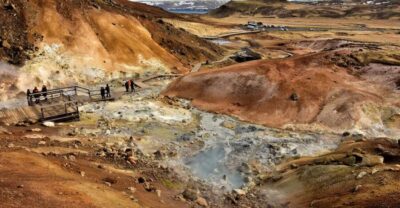
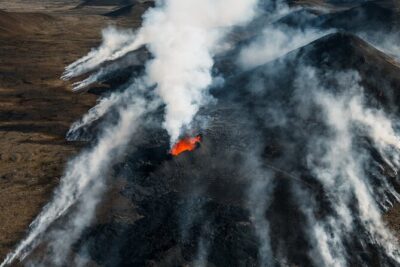
Helicopter Tour Over Iceland’s Reykjanes Volcano Eruption Site
Read our review →
Reykjanes Peninsula: Super Jeep Volcano Shuttle Tour
Read our review →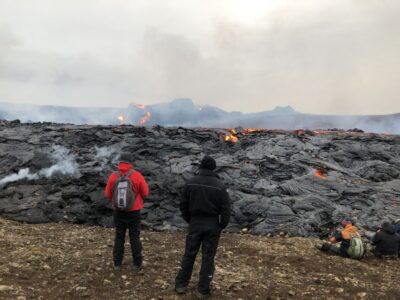
Browse the lists this tour appears in