
Reviewed · SILFRA SNORKELLING
Dive the Divide: Silfra Fissure Scuba Tour | Reykjavik Pickup
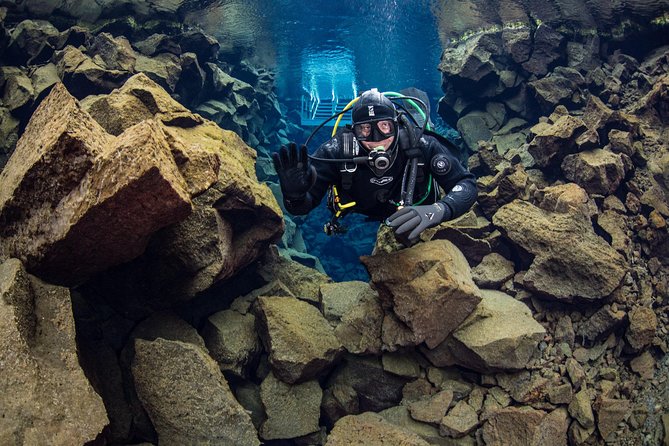
This is one of those Iceland plans where you go from classic scenery to a very specific science story. You travel out of Reykjavík to Þingvellir National Park, then suit up for a cold-water underwater route through the Silfra fissure, where the North American and Eurasian tectonic plates run right alongside each other.
Two things I really like about this tour. First, you get a small group format (max 3 travelers), so the guide can stay close while you manage dry-suit gear and buoyancy in extreme conditions. Second, you get a fully supported setup: equipment is provided, transportation is included, and you even get warm cookies and hot chocolate after.
One consideration before you commit: this is not an “I can figure it out at the water” experience. You need prior dry-suit certification (or logbook proof), and you should be ready for a physically demanding day, including carrying heavy equipment.
Key highlights worth planning around
- Max 3 travelers, which usually means more personal attention during setup and your time at the fissure
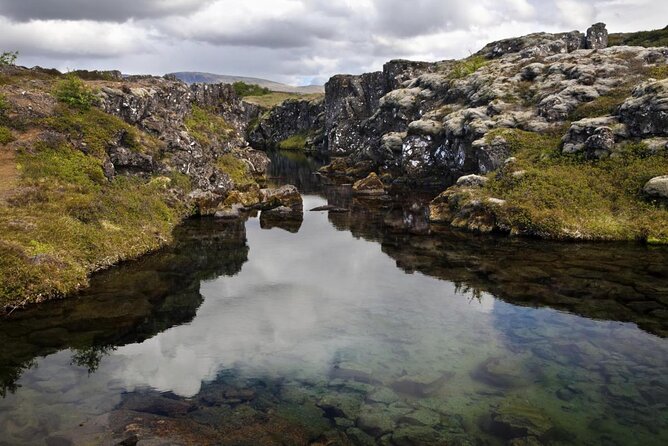
- Þingvellir + Silfra in one day, pairing UNESCO plate drama on land with the same plate boundary underwater
- Four Silfra sections: Deep Crack, Hall, Cathedral (to 22 m / 72 ft), then Lagoon
- Full gear is included down to hood, gloves, mask, fins, tanks, and weight system
- 300 m walk after the water, with options to remove weights or rest on the way
Why Silfra feels like a two-continent story you can touch
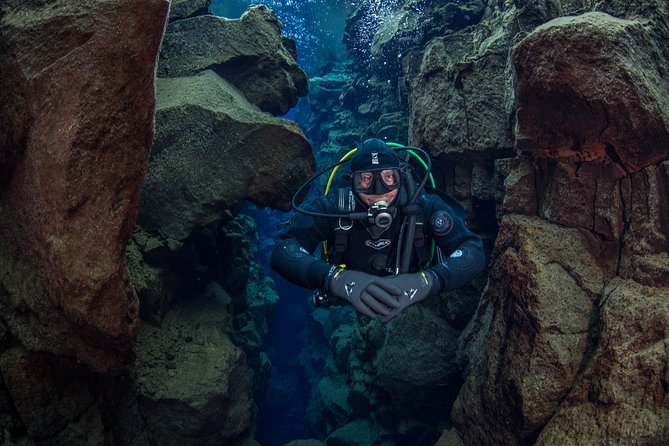
The Silfra fissure is special because it is a plate boundary you can actually experience up close. In the Reykjavík area, you might get the idea of plate tectonics from a viewpoint or a sign. Here, you get the real thing, with the water cutting through the crack that separates the North American and Eurasian plates.
You also get a bonus that makes the trip more than just a technical check mark: Silfra is known for crystal-clear visibility and a route that is designed for calm progress. The water’s gentle current and the visibility are a big part of why divers tend to remember this place even without focusing on marine life.
Finally, you are not just going to a “spot.” The route moves through named sections, starting with the narrow entry area (Deep Crack), widening into the Hall, reaching the deepest point at the Cathedral, and then finishing in the Silfra Lagoon. That structure helps you stay oriented and keeps the day feeling like a journey rather than one long wait.
More of the Silfra fissure:
- Silfra: Snorkeling Between Tectonic Plates – Meet on Location
★ 5.0 · 5,001 reviews - Silfra Snorkeling Between Continents Photos Included- Self Drive
★ 5.0 · 3,427 reviews - Silfra: Diving Between Tectonic Plates – Meet on Location
★ 5.0 · 2,139 reviews
Price and value: what $344.67 really covers in Iceland
At $344.67 per person, this is not a budget activity. But when you add up what is included, the price starts to look more reasonable for Iceland.
What you get included:
- Round-trip transportation from select Reykjavík pickup locations
- Thingvellir National Park admission
- Scuba equipment and dry-suit system including thermal undersuit, dry suit, BCD, regulator, tanks, mask, fins, hood, gloves, and weights
- A PADI-certified guide (listed as a Dive Master, but practically, this means dry-suit coaching and supervision)
- Hot chocolate and cookies
What is not included:
- Food and drinks
The value angle is the equipment and support. Dry-suit setup, correct weighting, and safe underwater procedures are hard to improvise when you are dealing with freezing water and a narrow fissure route. If you show up prepared, this tour can save you both time and stress, because the day is organized around the gear and the dive site logistics already.
Reykjavik pickup to Thingvellir: timing and how the day actually moves
Your day starts with pickup from specified Reykjavík hotels and accommodations. The operator notes pickup can take up to 30 minutes, so build in a little patience, especially if you are staying somewhere that requires extra walking or a quick explanation at the door.
Once you’re in the car, you head to Thingvellir National Park and meet your guide and small group. The park stop is listed as a substantial block of time (about 4 hours), and that matters because it prevents the day from feeling like a rushed sprint straight into cold water.
One practical note I like about the way this is structured: you are not just dropped off and left to find your way. You’re guided, you’re transported, and you transition in a planned sequence from land to water. That makes it easier to focus on what you control: your breathing, your dry-suit comfort, and your careful movements at the fissure entry.
Þingvellir National Park stop: UNESCO plates and real time on land
Thingvellir is a UNESCO World Heritage Site, and it does not feel like a postcard place once you’re there. You’re in southwestern Iceland at the edge of the plate boundary, with dramatic lava fields and Þingvallavatn (the lake) in the mix.
This is also where Iceland’s political history starts. The park includes Alþingi, described as Iceland’s first parliament, established in 930 AD. So you get two kinds of context in one stop: geology and history, both tied to the same location.
What I recommend you do with your time here:
- Take in the plate boundary concept before the underwater portion. If you see the crack and the way the land is shaped, the water route feels more meaningful.
- Use the time to warm up a bit before suiting up later. You may not feel cold right away, but Iceland cold adds up fast once you stop moving.
A potential drawback: if you are the type who wants only “action,” the park time may feel long. On the other hand, if you enjoy scenery and context, this land stop is what makes the whole Silfra story click.
More diving near Reykjavík:
- Silfra: Diving Between Tectonic Plates and Pick Up from Reykjavik
★ 5.0 · 590 reviews - Dive the Divide: Silfra Fissure Scuba Tour | Meet at Thingvellir
★ 4.5 · 172 reviews - Thingvellir: Silfra Fissure Diving with Optional Pickup
★ 4.6 · 73 reviews - Silfra: Diving Between Tectonic Plates
★ 4.8 · 64 reviews
Silfra fissure underwater route: Deep Crack to Hall to Cathedral to Lagoon
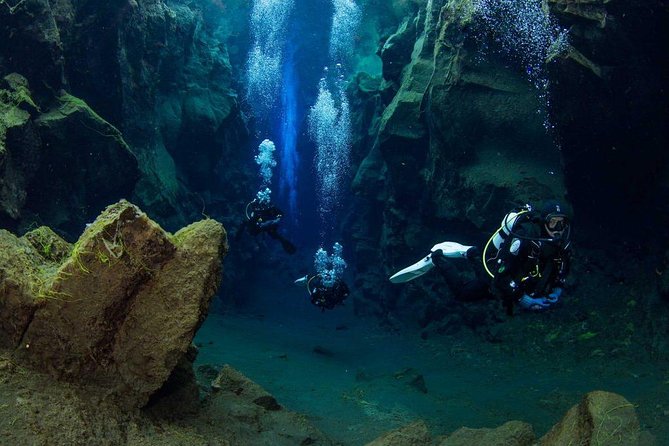
This is the heart of the experience, and the tour is mapped through four named sections. The route gives you variety, and it also helps with pacing.
Here’s the sequence you should plan for:
- Silfra Deep Crack: a narrow, winding passage near the entrance. Expect tighter space and slower movements.
- Silfra Hall: the crack opens slightly, letting you breathe and stabilize a bit more.
- Silfra Cathedral: the deepest point of the experience at 22 meters / 72 feet. This is where the route’s “statement moment” lives.
- Silfra Lagoon: the final section before exit.
Your total underwater time is listed as about 1 hour 30 minutes, and your experience is guided throughout, after a safety briefing. The tour is designed for people who already have dry-suit capability, so you should expect procedure and equipment management to be part of the flow, not something you’re learning from scratch.
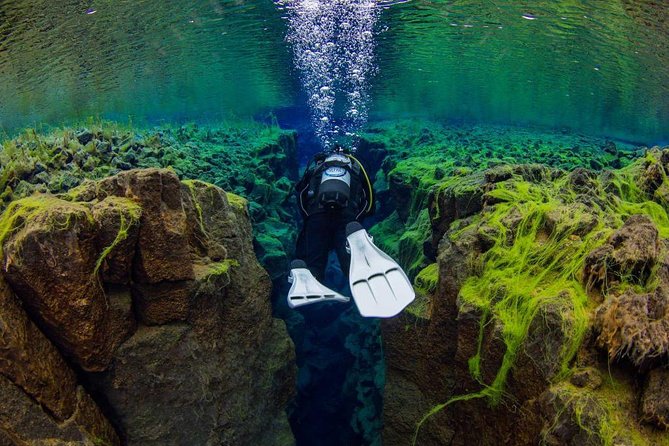
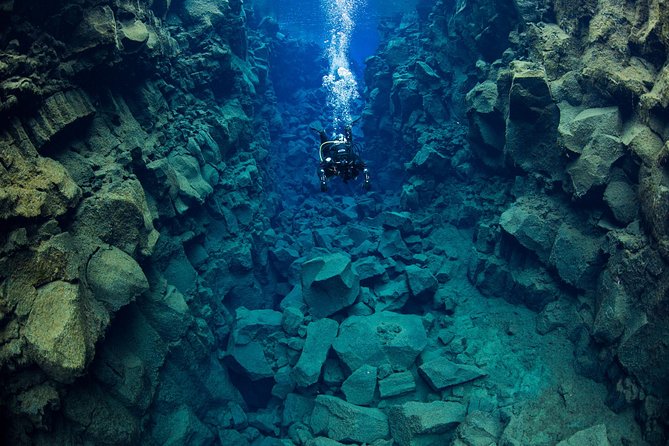
Also, the tour notes that conditions are often defined by the combination of very clear water and glacial origin. You may see ancient lava formations and the shapes inside the fissure that make the place look almost unreal. And because you are in a cold, clear system, your planning for trim and buoyancy matters more than chasing wildlife.
Dry-suit certification and fitness: the real gatekeepers
This tour has clear eligibility requirements, and they are not just paperwork.
You must have dry-suit experience, shown either by a dry-suit certification card or by logbook proof of completing at least 10 dry-suit dives. Your guide will ask to see the documentation.
You also need to be able to handle a physical day. The tour states it is challenging and requires the capability to carry heavy equipment up to 400 meters (listed as 1300 ft). Even if you are a strong diver, that ground workload can surprise you, especially in Iceland weather where you’re also carrying your own layers and staying warm.
One detail from the tour requirements that you should not treat lightly: glasses. Because you’ll wear a mask to see underwater, there can be nothing in the way of the seal. That means you cannot wear glasses under the mask. If you need vision correction, plan on contact lenses or bring prescription goggles.
And dry suits change the weighting game. One diver noted that if you’re used to trilaminate, neoprene can be buoyant and you may need at least twice normal weights. Even with proper weighting checks from your guide, this is a good reminder to arrive with the mindset that dry-suit buoyancy is different.
If you’re tempted to join because you are comfortable in open water but new to cold dry-suit procedures, this is the wrong place to test your comfort zone. Save that learning curve for a calmer training environment.
Gear, small group control, and the kind of guidance that matters
Everything you need is included: thermal undersuit, dry suit, BCD, regulator, tanks, hood, gloves, mask, fins, and weights. That’s a big part of why small-group control matters. When the group is small, your guide can help you adjust, confirm fit, and make sure you’re set up properly for a fissure route.
The guide quality also comes through in names mentioned by earlier participants. People have praised Maciek for being attentive, Arturo for being great, and Julian for making setup and the journey feel easier. Katja also appears in accounts tied to the trip experience and support.
One thing to keep expectations realistic: with a small group, the guide can still be managing timing at a popular site with lots of snorkelers and divers. If the group behind you is pressing to start quickly, your guide may move efficiently rather than pausing for extra photo time. I suggest you ask early for a quick plan for the iconic rift moment so you do not feel rushed later.
The water reality: cold, clear, and built for photos
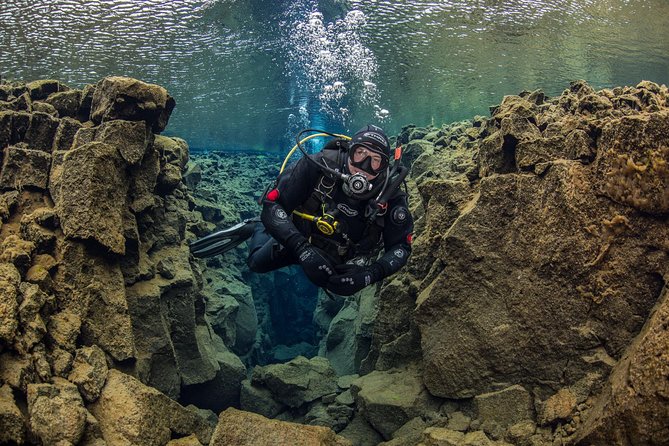
Yes, the water is cold. The tour expects cold-water conditions, and divers have described temperatures around 2 to 3°C. This is why the included thermal undersuit plus dry suit and hood matter. Warmth is not just comfort here, it affects your control and how relaxed you feel while you manage equipment.
The best payoff is visibility. Clear fissure water can make the geology look like a sci-fi set. People describe seeing extremely far, with visibility around 100 meters in some conditions. Even if you’re not chasing video or underwater photography, that clarity gives you a safer sense of your surroundings in a narrow route.
What you should focus on:
- The geometry of the fissure, especially at transitions from the Deep Crack into the Hall
- How the corridor-shaped spaces change the way you move your fins
- Photo opportunities near the iconic rift area, so you can capture the two-side symbolism properly
Exit, the 300 m walk, and how to make the ending less annoying
After you surface, you dry off and talk through the experience. Then comes the part that can feel like an afterthought until you’re doing it.
At the exit platform, your guide assists with removing your fins. After that, you walk about 300 meters (984 ft) back to the car park. The tour also notes that weights or gear can be removed to make the walk easier, and there is an option to rest at the visitor entrance along the way if needed.
This is a good time to be honest with yourself about fatigue. Even though the underwater portion is structured, the day includes walking with gear and carrying heavy equipment earlier. If you start feeling stiff, ask to adjust the plan during the exit, not after you’re already struggling.
Then you ride back to Reykjavík to end your day.
Who should book this Silfra scuba session, and who should pass
This tour makes sense if:
- You already have dry-suit certification and real dry-suit experience
- You are comfortable with cold-water conditions and can manage your gear confidently
- You can meet the physical demands of carrying equipment and walking with gear
- You want a small-group format with close guide attention
- You enjoy geology and the plate boundary story more than marine life hunting
It is not a great fit if:
- You are trying this as a first dry-suit experience. The tour requirement is explicit, and the water route is not designed for beginners.
- You have medical conditions that exclude participation. The operator points you to their medical questionnaire and handbook.
- You rely on glasses under a mask. Plan for contacts or prescription goggles.
- You need an easy day. This is a challenging logistics-and-gear day, even for capable divers.
One more practical travel tip: the tour strongly advises waiting 24 hours after the underwater session before flying. If your itinerary has tight flight connections, build in buffer time.
Should you book this tour?
I’d book it if you tick the eligibility boxes and you want a rare Iceland experience that mixes UNESCO geology with a structured underwater route through four Silfra sections. The small-group cap of 3 travelers is a real advantage for attention and safety, and the included gear and transport make it easier to show up without a ton of logistics.
I’d skip it if you are new to dry suits, unsure about your equipment management, or you are not ready for cold water plus a physically demanding day that includes carrying heavy gear. Silfra is beautiful, but it rewards preparation.
If you do book, come with your dry-suit proof ready, suit size planned, and a vision plan for the mask seal. Then focus on what makes this place special: the clean fissure geometry, the plate boundary concept made physical, and the guide-led route that takes you from narrow crack to Cathedral depth and out to the Lagoon.
FAQ
Do I need dry-suit certification to join?
Yes. You must have previous dry-suit experience, either shown by a dry-suit certification card or by logbook proof of at least 10 dry-suit dives. Your guide will ask to see it.
Where does pickup happen?
Pickup is offered from select Reykjavík hotels and accommodations. The operator only serves the pickup locations listed on their pickup list.
How long is the tour?
The tour lasts about 6 hours total, with about 4 hours at Thingvellir and about 1 hour 30 minutes at Silfra.
What scuba gear is included?
Gear is included: thermal undersuit, dry suit, BCD, regulator, weights, tanks, hood and gloves, mask, and fins.
How deep does the underwater route go?
The deepest point is listed as 22 meters (72 feet).
Can I wear glasses under my mask?
No. Glasses can interfere with the mask seal. You will need contact lenses or prescription goggles.
Is there a minimum age?
The minimum age is 18 years old.
Reviewed most recently in Reykjavík
- Reykjavik Private 4-Hour Tour with Transfer★ 5.0 · 7 reviews
- Landmannalaugar & SecretGems | Private Tour | PRO Photos included★ 5.0 · 8 reviews
- Private Airport Transfer between KEF Airport & Reykjavik★ 4.5 · 8 reviews
- Keflavik Airport Transfer to /or From Reykjavik, Iceland★ 4.5 · 8 reviews
- Reykjavik Scavenger Hunt and Highlights Self Guided Audio Tour★ 4.5 · 8 reviews
- Reykjavik/Keflavik Airport Private Transfer – City (Vice Versa)★ 4.5 · 8 reviews
- Transfer To & From Blue Lagoon★ 4.0 · 8 reviews
- Reykjavik: Christmas Walking Tour with Icelandic Traditions★ 4.7 · 8 reviews
Silfra Snorkelling, compared.
Silfra: Snorkeling Between Tectonic Plates – Meet on Location
Read our review →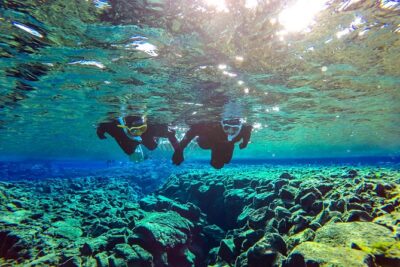
Silfra Snorkeling Between Continents Photos Included- Self Drive
Read our review →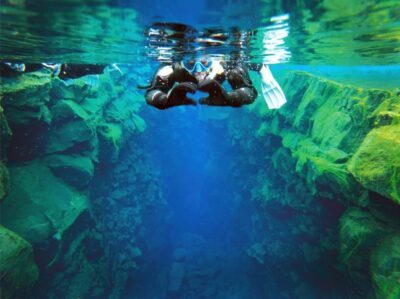
Silfra: Fissure Snorkeling Tour with Underwater Photos
Read our review →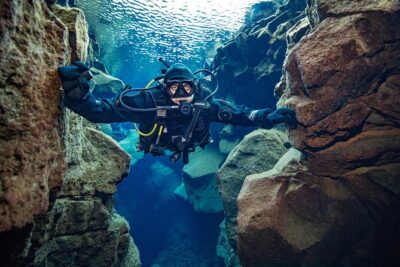
Silfra: Diving Between Tectonic Plates – Meet on Location
Read our review →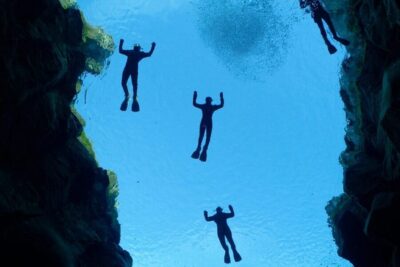
Silfra Fissure Snorkeling between Two Continents
Read our review →
Silfra Drysuit Snorkeling with Free Photos – Meet on Location
Read our review →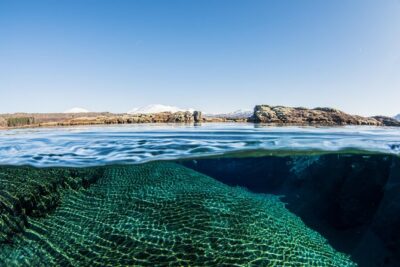
Silfra: Snorkeling Between Tectonic Plates Pick Up from Reykjavik
Read our review →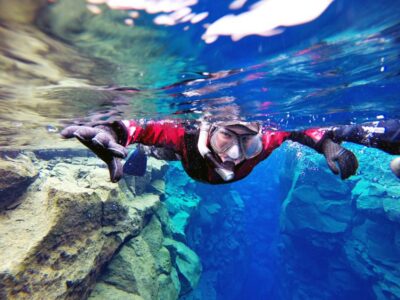
Silfra: Half-Day Snorkeling Day Trip with Underwater Photos
Read our review →Browse the lists this tour appears in