
Reviewed · GOLDEN CIRCLE
Kerið Volcanic Crater Admission Ticket
Kerið is one of the easiest ways to understand Iceland’s volcanic story without hiking for hours. This cone-caldera sits right on the Golden Circle route, so you can turn a simple road stop into a close-up geology moment.
I especially love the aquamarine crater lake and how it looks different in every light. I also love walking the crater rim trail for wide views that feel far bigger than the size of the stop.
One consideration: the experience is self-guided, and the entrance setup can feel casual, including occasional reports about access control. If you want everything tightly managed, you may find the vibe a bit loose.
Key Kerið Crater Ticket Takeaways
- Turquoise lake chemistry: the vivid color comes from minerals, not rainfall.
- Cone volcano backstory: the crater formed after magma emptied and the cone collapsed.
- Easy Golden Circle stop: you can reach Kerið by car with free parking.
- Rim views plus descent: you can walk the rim, and you can hike down mossy slopes.
- Daylight hours only: plan around daylight, not clock time.
- Good value at $5: the paid entry is modest for such a photogenic site.
Kerið Crater: A Golden Circle Stop With Real Volcanic Drama
If you’re driving Iceland’s Golden Circle, Kerið is the kind of stop that turns a schedule check into an actual memory. It is small enough to fit neatly into a road trip, but the geology is not small. You’re looking at a volcanic crater that formed about 6,500 years ago, and the walls and lake make it feel like you are inside the Earth’s after-story.
The crater is part of the northern end of a row called Tjarnarhólar. It sits within the Western Volcanic Zone, the same broad volcanic system that includes places like the Reykjanes peninsula and Langjökull Glacier. That context matters, because Kerið is not just a pretty hole in the ground. It is a working example of how Iceland’s volcanoes build, empty, and collapse.
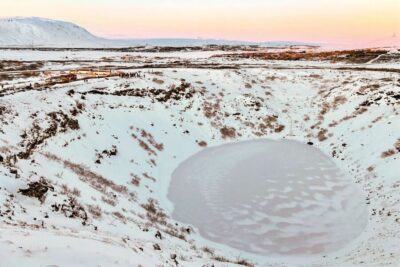
The main payoff is simple: you get close views of a red volcanic rock caldera and a bottom lake so bright it looks painted. Then you walk around the rim to see how the crater shape changes with each step.
More Golden Circle days from South Iceland:
- From Gullfoss: Langjökull Glacier Snowmobile Tour
★ 4.7 · 294 reviews - Gullfoss: Sleipnir Monster Truck Tour of Langjökull Glacier
★ 4.7 · 137 reviews - From Geysir: Snowmobiling & Ice Cave on Langjökull Glacier
★ 4.4 · 100 reviews
What You See at the Bottom: Turquoise Water in a Volcanic Bowl
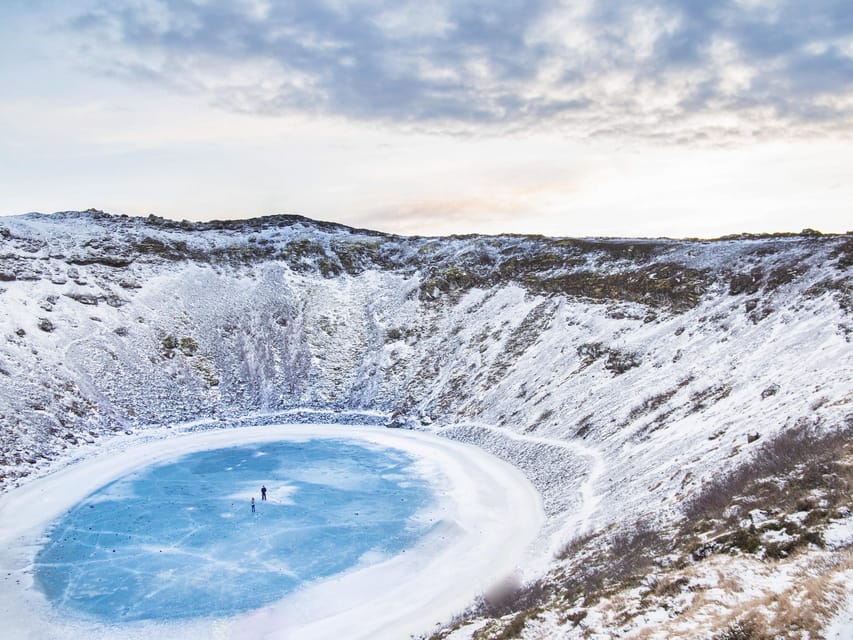
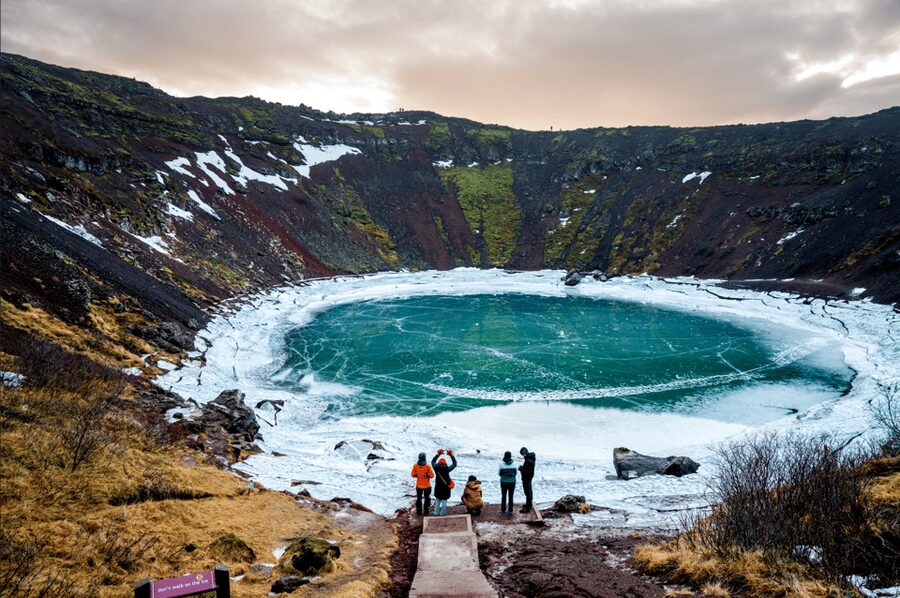
Kerið’s most famous feature is the brilliant turquoise, aquamarine lake at the bottom. The color is vivid, and it has a very specific reason. The lake is shallow, but the minerals in the soil give it that bright tone. It is not mainly rainfall that fills the crater. Instead, the water level matches the water table.
That detail is worth remembering when you visit, because it changes how you think about what you are looking at. You are not watching a temporary puddle. You’re seeing groundwater interacting with volcanic rock and minerals. Even when the weather is gray, the lake can still look startling.
As for the crater itself, it is about 55 meters deep, roughly 170 meters wide, and about 270 meters across. Those numbers help you gauge the scale. Standing at the rim, it feels big enough to take in, but not so big you feel lost. The geometry is readable. You can see the slopes, the bowl shape, and the way light slides across red rock.
The Mossy Descent: Walking the Crater Walls Up Close
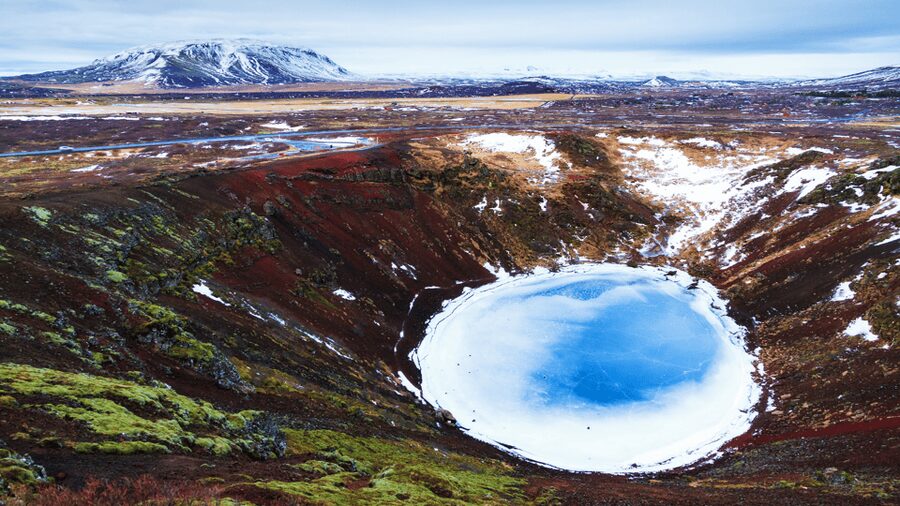
The Kerið experience isn’t just looking. You can hike down one of the sloping crater walls, and that is where the site really clicks. The descent is along a wall that is blanketed with deep green moss. That moss changes the textures. Instead of bare stone, you get soft greenery clinging to red volcanic rock.
At the bottom, your perspective flips. The lake is no longer a distant color patch. It becomes the focal point, and you notice how the crater walls channel your line of sight. You also get closer to the mineral story, since you are right beside the materials that influence the lake’s color.
This part is not described as dangerous in the information you have, but do take it seriously as a hike on uneven ground. Wear grippy footwear, especially if it has been damp. And keep in mind that Kerið is open only during daylight hours, so if you are driving late, you can still enjoy the rim but might miss the descent.
Rim Trail Views: Why the Walk Matters at Kerið
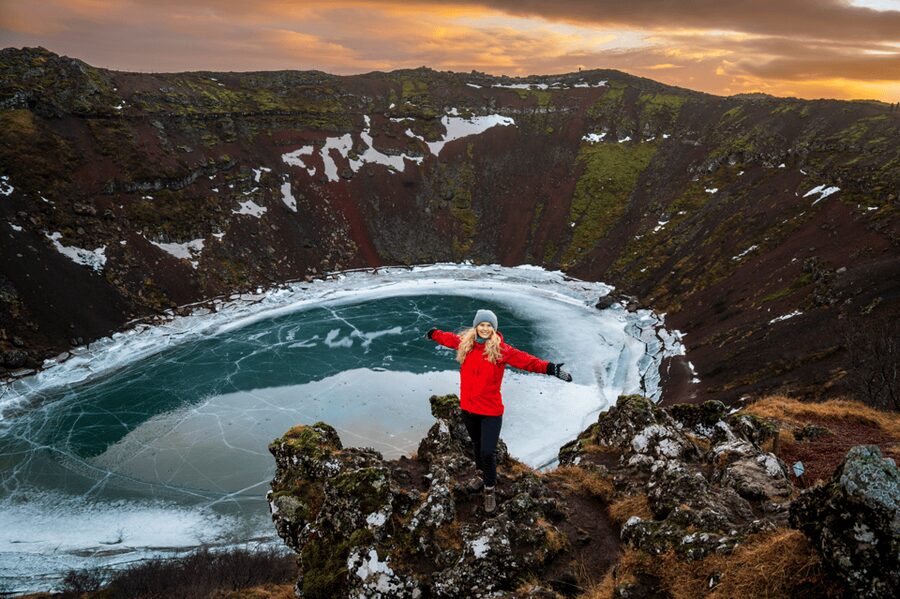
The rim walk is one of those underrated travel moves. At Kerið, the crater rim trail gives you changing angles fast, with minimal fuss. As you circle, the view shifts from a wide crater bowl to tighter compositions where the red rock and turquoise lake contrast sharply.
This is also where you get panoramic payoff without needing a big climb. You can take quick stops for photos, then keep moving to find a new line of sight. Even if you think you already found the best picture from the first viewpoint, the rim proves you wrong. The crater’s curve and depth change what the lake looks like.
Photo tip that helps in real life: watch the light. The lake can look different from one side of the rim to the other, and it also changes as clouds pass. If you can, arrive in calmer morning light, when the site often feels less crowded in the way that makes photography easier. One person specifically described coming at sunrise with a rental car and matching the scene to the early light, and that is exactly the kind of timing that makes Kerið sing.
More Volcanoes & Lava in South Iceland:
- Volcano Exhibition and Cinema – Lava Centre Iceland
★ 4.4 · 66 reviews - Small Group Day Tour to Lakagigar volcano by Super Jeep from Klaustur
★ 5.0 · 44 reviews - Eyjafjallajökull Volcano and Glacier Jeep Tour
★ 4.5 · 5 reviews - Reykjavik: LAVA SHOW – Immersive Experience Entry Ticket
★ 4.8 · 3,360 reviews
The Volcanic Story Behind the Shape: Not an Explosion, a Collapse
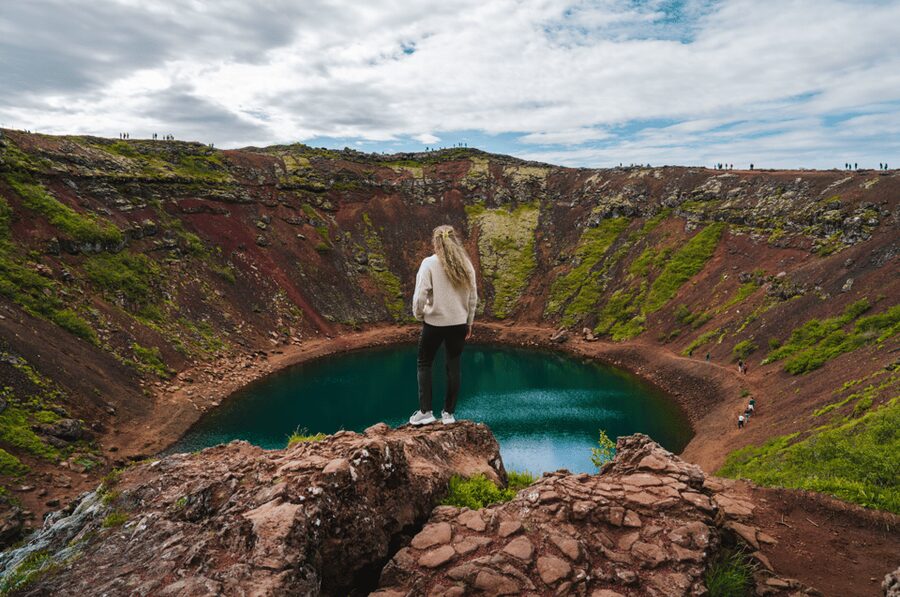
Kerið’s formation is the kind of fact that makes you see the crater in a new way. This caldera was not formed by a volcanic explosion. Instead, it started as a cone volcano that erupted and emptied its magma reserve.
After the magma drained away, the cone lost its internal support. The weight of the cone then collapsed into the empty chamber. That collapse created the current crater.
Why does this matter for your visit? Because it explains the crater’s bowl-like form and the sense of a structured collapse rather than a blasted-out hole. You’re not staring at chaos. You’re looking at the geometry of a system that emptied and folded inward.
It also fits the broader volcanic-zone story, where Iceland’s volcanic activity repeatedly builds and reshapes the land. Kerið is a small site, but it is accurate, and it gives you a clear model for how volcanic features can form.
A Simple Itinerary for Your Day on the Golden Circle
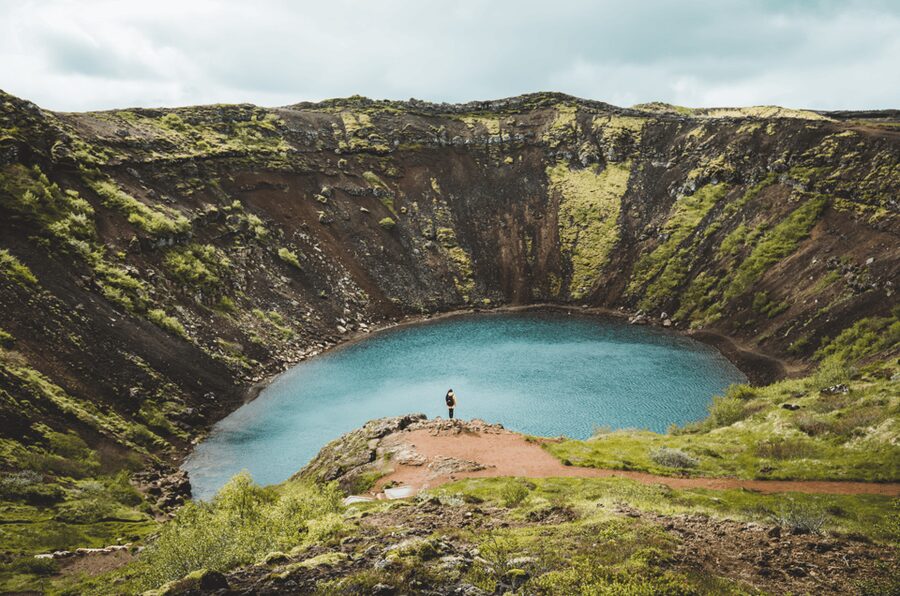
Kerið is described as a self-guided exploration with a ticket that is valid for 1 day, during daylight hours. That means your “itinerary” is really about pacing yourself once you arrive.
Here’s a practical flow that keeps you from rushing.
Arrival and First Look
Park using the free parking available by car. Then take a few minutes at the rim to scan the full bowl and spot your route. This first glance helps you understand where the descent is, where the lake sits, and which rim angles will give you the best photos.
If you arrive early, the crater can feel more dramatic, because the light hits the red rock and the water color stands out. One visit described reaching the site at dawn, which makes sense because early light often makes colors pop.
Rim Trail Walk for Angles
Next, walk the crater rim trail. Don’t treat it like a checklist. Instead, walk until you find two or three viewpoints you genuinely like, then stop at the best one for photos. The rim trail is where you get a sense of depth and scale, and it is where you can see how the crater sits in its surrounding area.
Optional Descent for Texture
If you feel good walking on uneven ground, go for the descent on the sloping wall. The moss is part of the charm, and being down at the bottom changes the whole feel of the site. You get closer to the rock textures and the lake’s mineral story.
Time Buffer for Daylight
Build in a cushion. Kerið is open only during daylight hours, so if you are driving from another stop on the Golden Circle, don’t treat Kerið as your last-minute Hail Mary. If you time it right, you can do rim and descent. If not, focus on the rim, because it still delivers.
Price and Value: Why $5 Can Be Enough in Iceland
The admission is $5 per person. That is not just cheap by Iceland standards, it is a smart value for what you get: a close-up volcanic crater, a dramatic colored lake, and multiple viewpoints, all without needing a long tour day.
This is also one of those attractions where paying for access feels proportional to the experience. You are paying for the ability to explore the crater area yourself and get your own timing for photos and walking. The site is not marketed as a guided storytelling session with a long program, so the value comes from freedom of movement and the natural spectacle.
One small reality check: there are occasional reports that access checks can feel loose. If you come in expecting strict control, you might notice a casual vibe. That does not change the crater experience itself. But it can affect how formal the entry process feels.
Who This Is Best For on the Golden Circle
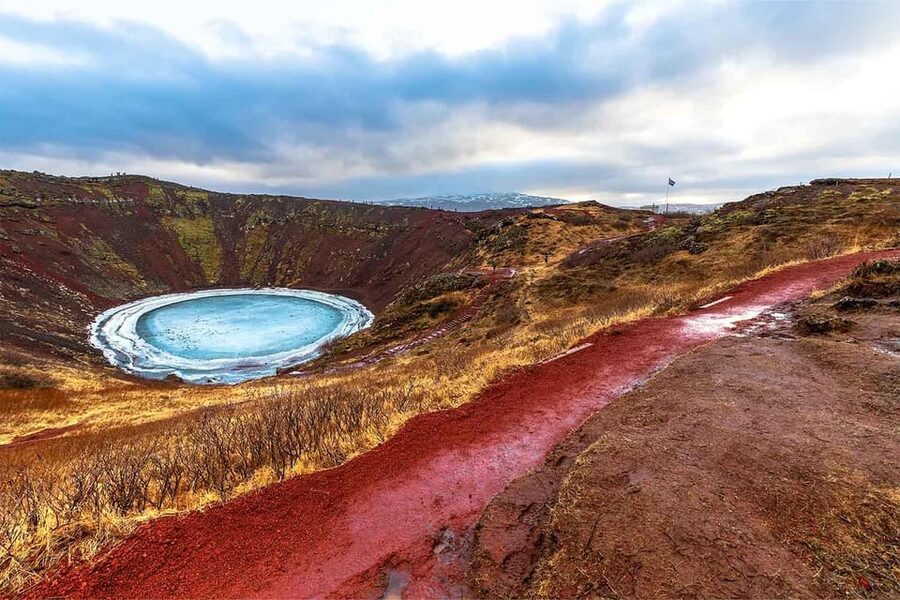
Kerið works for a lot of travel styles.
- If you love photography, the colors and angles make it a high-yield stop.
- If you want real geology facts you can actually look at, Kerið gives you a clear formation story.
- If you are driving with family or friends and want an easy win, the site is car-friendly and you can pace yourself with rim-only or rim-plus-descent.
- If you need wheelchair accessibility, it is listed as wheelchair accessible, which makes it easier to include in mixed groups.
If you hate any walking at all, plan carefully. You can still enjoy rim views, but the full “up close” experience includes a descent path and walking around the crater.
Practical Notes That Save You Hassle
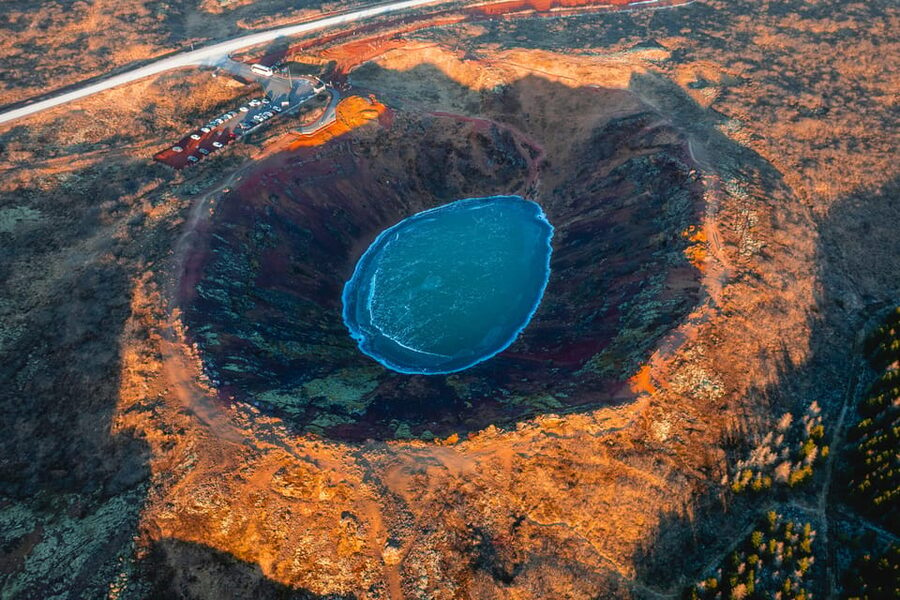
Here are the practical points that matter most for a smooth visit.
Parking and Getting There
Kerið is easy to reach by car, and you get free parking. That convenience matters on the Golden Circle, where you can lose time to congested stops. With parking handled, you can focus on your route and lighting.
Daylight Hours
Kerið is open during daylight hours only. This is a big deal in Iceland. Don’t plan it like a late-night stop. Match it to your day’s driving rhythm.
Self-guided Means You Drive Your Own Pace
Because it’s self-guided, you should bring your own plan for how long you want to linger at each viewpoint. If you are the type who likes to move fast, you can. If you like to stop and really watch, you can do that too.
Should You Book the Kerið Crater Admission Ticket?
Yes, if you’re on the Golden Circle and you want a high-impact stop that does not eat your whole day. For $5, you get a rare combination: the turquoise crater lake, the crater-rim viewpoints, and the chance to experience volcanic scale up close.
Skip booking only if you want a fully guided program with strict, structured entry and you dislike self-paced sites. If you’re okay with a casual entry vibe and you care more about what you can see and walk than how rehearsed the experience feels, Kerið is worth it.
In short, Kerið is one of those small-ticket places where the scenery does most of the talking. If you time it for good light, you will remember it long after the drive.
FAQ
Where is Kerið Crater?
Kerið is in the Southern Region of Iceland and is an easy stop along the Golden Circle route.
How much is the Kerið admission ticket?
The ticket price is $5 per person.
How long is the experience valid?
The ticket is valid for 1 day.
Is the visit self-guided?
Yes, the ticket includes self-guided exploration.
What are the main things I can see?
You can explore the crater up close, admire the turquoise crater lake, and walk the crater rim trail for panoramic views.
Can I hike down inside the crater?
Yes, visitors can hike down one of the sloping crater walls.
What makes the lake turquoise?
The lake is shallow, and its vivid color comes from minerals from the soil. The water level is at the same level as the water table and is not caused by rainfall.
How long should I plan for the stop?
The experience is listed as 1 day, but it is designed as a stop you can fit into your trip while exploring at your own pace.
Is there parking?
Yes, there is free parking for visitors arriving by car.
Is Kerið wheelchair accessible?
Yes, it is listed as wheelchair accessible.
Are there entry times?
The ticket is valid for 1 day, with starting times based on availability.
Is Kerið open at night?
Kerið is open during daylight hours.
Reviewed most recently in South Iceland
- Snowmobiling & Natural Ice Cave from Geysir Area★ 3.5 · 8 reviews
- Reykjavík: Golden Circle & Extra Waterfalls Small Group Tour★ 4.8 · 8 reviews
- Glacier Rush – Fast pace snowmobile – SnoMo Glacier★ 5.0 · 10 reviews
- Vestmannaeyjar: One Hour Small Islands Trip★ 4.6 · 11 reviews
- Reykjavik Shore Excursion: The Golden Circle Full Day Tour★ 4.5 · 12 reviews
- Sólheimajökull Glacier: Guided Hike with Equipment★ 4.8 · 13 reviews
- Icelandic Horse Riding and Whale Watching Cruise from Reykjavík★ 4.0 · 14 reviews
- Sólheimajökull: Glacier Hike and Blue Ice Cave Tour★ 5.0 · 15 reviews
Golden Circle, compared.
Golden Circle Full-Day Tour with Kerid Crater
Read our review →
Small-Group Golden Circle, Blue Lagoon with Ticket & Kerid Crater
Read our review →
Golden Circle, Kerid Crater, & Blue Lagoon Tour
Read our review →
Golden Circle Classic Day Tour from Reykjavik
Read our review →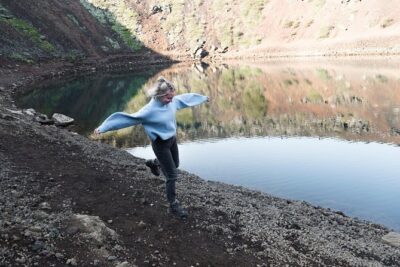
Golden Circle with Kerid Volcanic Crater Day Tour from Reykjavik
Read our review →
Small-group Golden Circle Classic Tour from Reykjavik
Read our review →Browse the lists this tour appears in